Industry observers are calling 2026 the “Year One of AI Hardware.” As large language models expand from cloud to edge and AI Agents move from chat boxes into the physical world, the ESP32 ecosystem — with its “connect + compute” dual-engine strategy, a 3-million-strong open-source community, and a product matrix ranging from $1 chips to flagship SoCs — is emerging as the most explosive infrastructure of this transformation.
1. The Edge AI Explosion
The global edge AI market reached $26.9B in 2025 and is projected to hit $128.5B by 2032 (CAGR 25.3%), with hardware accounting for 60%. Behind the surge is a paradigm shift: AI inference moving from “must be connected” to “offline autonomous.”
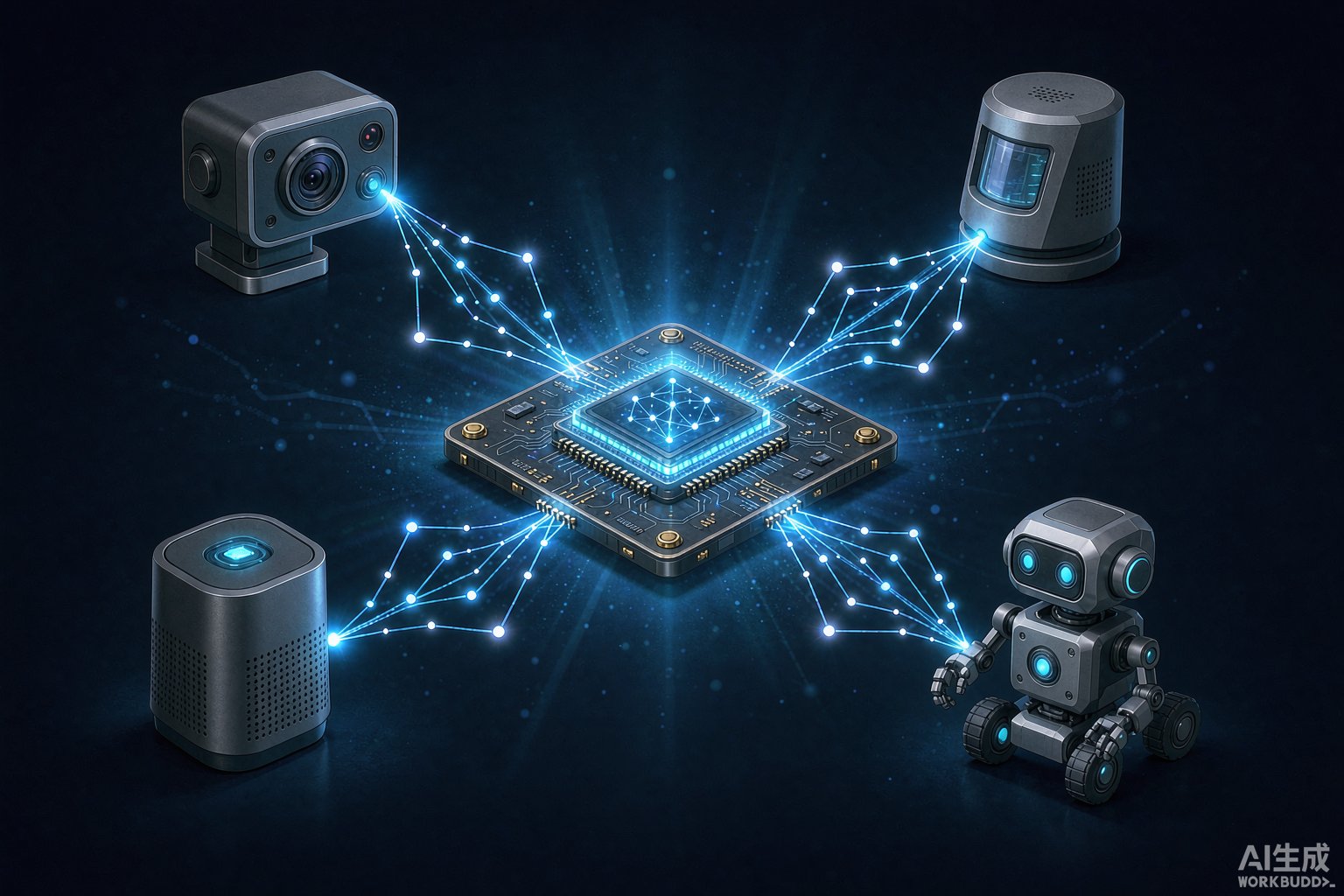
The ESP32-P4 addresses this precisely: a dual-core RISC-V @ 400 MHz with a programmable AI co-processor supporting INT8/INT16 tensor operations, and 2 MB of on-chip SRAM for zero-latency model loading. Benchmarks show 128×128 YOLOv5s-tiny detection at 83ms end-to-end with only 180mW peak power — battery-powered locks, smoke detectors, and industrial sensor nodes can run 100,000 daily inferences without a battery swap, something that required a Linux-class application processor just two years ago.
The ESP32-S31 goes further: a 128-bit SIMD datapath plus Wi-Fi 6 TWT power management, with DVP camera, LCD display, dual I2S audio, and Bluetooth LE Audio on a single chip — satisfying the full multimodal requirement: “see clearly, hear, speak, and connect.”
2. AI Agents: Digital Brains for the Physical World
AI Agents are no longer abstract concepts. Once AI can perceive, reason, and act, it needs a physical carrier to interact with the real world — that is AI hardware’s historical mission.
The ESP32-S31 natively supports Espressif’s AI Agent platform for direct LLM collaboration; combined with open-source ecosystems such as EMQ Device Agent, developers define device capability models in natural language and AI auto-generates communication protocols — a 10x development-efficiency gain. Smart speakers no longer just “follow commands” but proactively sense the environment and initiate conversation; industrial sensors no longer just “report data” but autonomously diagnose faults; AI toys remember a child’s preferences and start new games on their own.
3. The Ultimate Protocol Integration
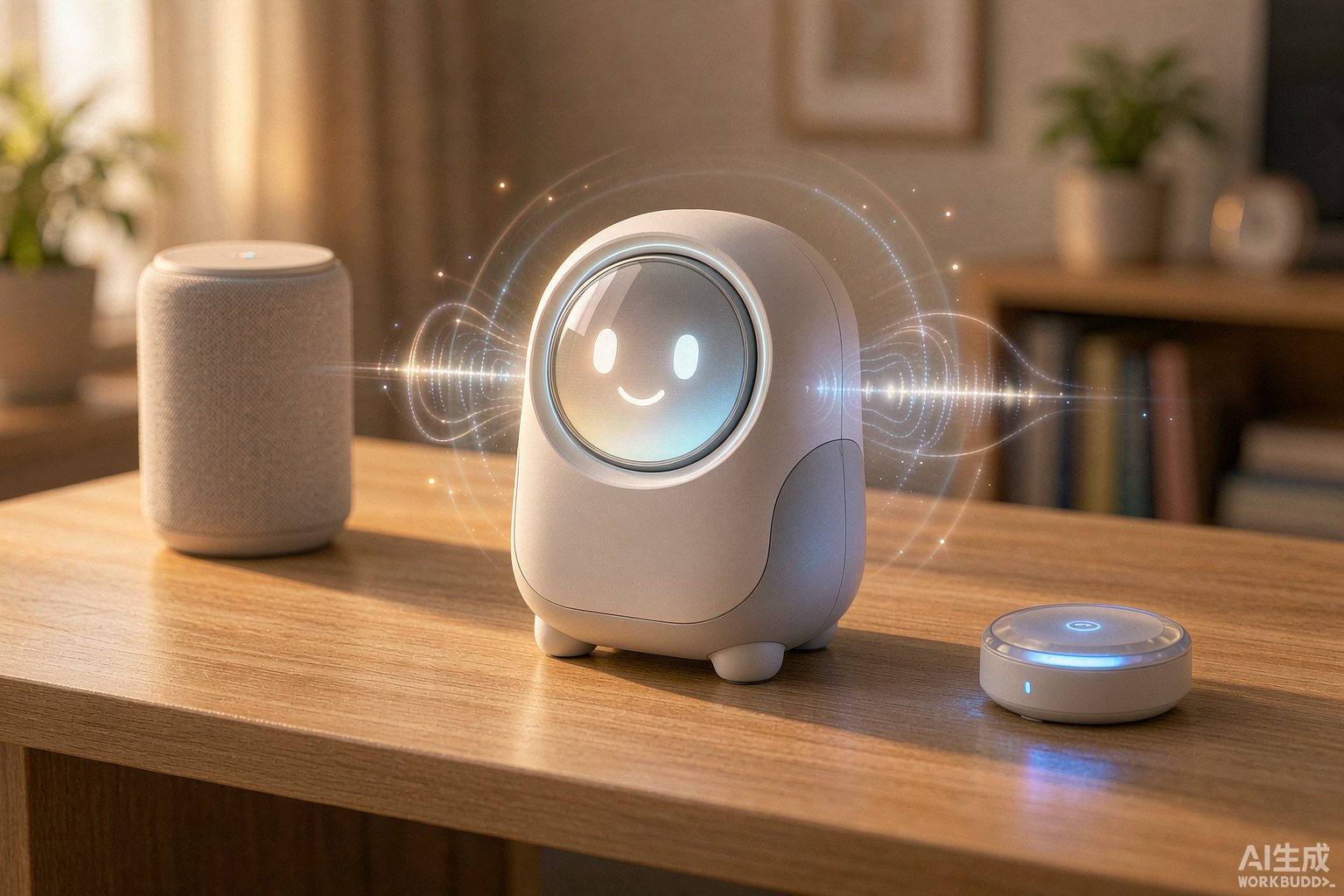
The Matter standard is reshaping smart home interoperability. The ESP32-C6 delivers Wi-Fi 6 + Thread dual-mode at ~$5, currently the most cost-effective Matter chip; the ESP32-S31 integrates Wi-Fi 6, Bluetooth 5.4 (LE + Classic), Thread/Zigbee/Matter, and a Gigabit Ethernet MAC — one chip covering all major protocols. This “all-protocol, single-chip” capability attacks the industry’s most painful fragmentation: one home no longer needs multiple gateways, multiple apps, and multiple ecosystems.
4. From Chip to Platform: Espressif’s Strategic Ascension
Espressif is transforming from a Wi-Fi MCU supplier into a “compute + connect” platform AIoT company: net profit grew 50.04% YoY in the first three quarters of 2025 with gross margin climbing to 47.97%; a RMB 1.778B private placement funds Wi-Fi 7 and edge-AI processor R&D, with two 12nm chips planned for tape-out in 2026. The deeper moat remains B2D2B — 3M+ developers are not just users but evangelists and innovation engines, a bottom-up flywheel that is hard to replicate.
5. A Selection Roadmap for Hardware Teams
- Ultra-low cost, basic connectivity: ESP32-C3 (RISC-V, Wi-Fi + BLE, ~$1)
- Matter / Thread ecosystem: ESP32-C6 (Wi-Fi 6 + 802.15.4, ~$5)
- AI interaction + multimedia: ESP32-S3 / S31 (AI acceleration + display + audio, $3–8)
- High-performance edge AI / HMI: ESP32-P4 (400 MHz + AI co-processor, $5–10)
The golden window for AI hardware will not wait for the hesitant. Vencreat has validated this route with in-house designs such as the ESP32-S3 voice interaction core board, and provides full-chain productization services from chip selection and solution design to mass production.
Data and specifications are compiled from public industry sources; chip specifications are subject to Espressif’s official documentation.